When Space and Seconds Collide.

Blog contribution by Nora Colman, MD


The built environment is not a passive backdrop to care delivery; it is an active participant in shaping how safely and effectively care is provided. While healthcare environments are designed with good intentions in mind, we cannot underestimate the profound influence that physical space has on human performance, clinical decision-making, and ultimately, patient safety.

To truly design for safety, we must understand the complex cognitive and operational realities clinicians navigate every day — especially in moments when time, space, and life converge.


A Corridor in Crisis

The elevator doors open and urgency spills into the corridor.

A patient lies atop a moving stretcher, chest rising only with the force of compressions. A nurse leans over the torso, hands locked in position, cadence steady — performing CPR while the bed continues forward. The respiratory therapist stabilizes airway tubing, careful to prevent dislodgement as the team navigates the turn from elevator to hallway. Behind them, more voices gather — the physician code leader directing rhythm, another clinician urging the path forward.

In this moment the corridor feels long and unforgiving. Equipment carts press against the walls. A linen bin juts slightly into the path. Each obstruction demands a split-second decision: steer around, slow down, re-adjust footing — all while maintaining uninterrupted compressions.

This is not a controlled resuscitation bay.

This is life-saving care in motion.

Hands continue compressions as wheels rattle over flooring transitions. The space forces bodies closer together. A voice calls out, “Which room?” A finger points. Another clears the way. The team moves as a coordinated organism, yet every individual carries their own cognitive and physical strain — managing footing, spatial awareness, communication, and vigilance.

The patient does not experience architecture as design.

They experience it as time — time gained or lost. Every added second navigating distance, every hesitation to find their way, every slow-down to avoid obstacles in their path, becomes part of the clinical equation.

Here, the built environment reveals its true power.

This moment exposes what design plans cannot show: the reality that care does not pause because of spatial constraint. Clinicians compensate. They improvise. They quite literally, carry safety on their shoulders.

Through the chaos, resilience emerges. A team synchronized under pressure. A leader guiding direction amidst chaos. A choreography of urgency unfolding in a space never truly designed for movement under crisis.

Care continues, not because the environment makes it easy — but because the people within it refuse to let space define the outcome. This is where design meets reality, where intention meets urgency, and where the opportunity lies: to reimagine our environments not as passive corridors, but as active partners in moments where every second, every step, and every decision matters.


The Invisible Work Behind Every Clinical Decision

Modern healthcare is a high-stakes ecosystem where clinicians continuously balance competing demands: multitasking, interruptions, time pressure, communication overload, and emotional intensity. These realities rarely appear on architectural renderings, yet they define how care unfolds in real life.

Clinicians do not simply “use” space — they adapt to it, work around it, and often compensate for its shortcomings. When design fails to reflect true clinical workflows, it increases cognitive load and error potential. Poor sightlines, long travel distances, ambiguous room layouts, and environmental noise all quietly erode safety margins.

True safety-aware design begins with asking not only what should this space look like? But how will clinicians think, move, and respond under pressure within this space?


Designing for Resilience, Not Just Efficiency

Care delivery is not linear. It is dynamic, interrupted, emotionally charged, and constantly evolving. While traditional design processes often envision ideal workflows, real-world practice is shaped by urgency, unpredictability, and the human response to complexity.

Human factors science encourages us to see errors not as isolated failures, but as opportunities to better understand how system design influences performance. Layout, visibility, acoustics, and spatial relationships shape how clinicians move, think, and communicate — affecting not only efficiency, but resilience, decision-making, and the ability to adapt in moments of pressure.

Safety-centered design does not seek to eliminate every misstep; rather, it focuses on building systems that anticipate disruption and support the unpredictability that is inevitable. This means creating environments that enhance situational awareness, reduce cognitive burden, and enable coordinated response when conditions rapidly shift.

A truly resilient environment acknowledges that clinicians are human. It designs intentionally for focus, clarity, teamwork, and adaptability when stakes are highest.

Without meaningful clinician engagement, design risks optimizing for theoretical scenarios rather than lived experience. Interdisciplinary co-design brings visibility to the subtle choreography of movement, communication, and improvisation that defines real care — allowing spaces to better support both what is planned and what is inevitably unplanned.

The CPR corridor scenario is not an exception; it is a powerful reminder that healthcare environments must be prepared not only for routine operations, but for the unpredictable realities of care delivery.

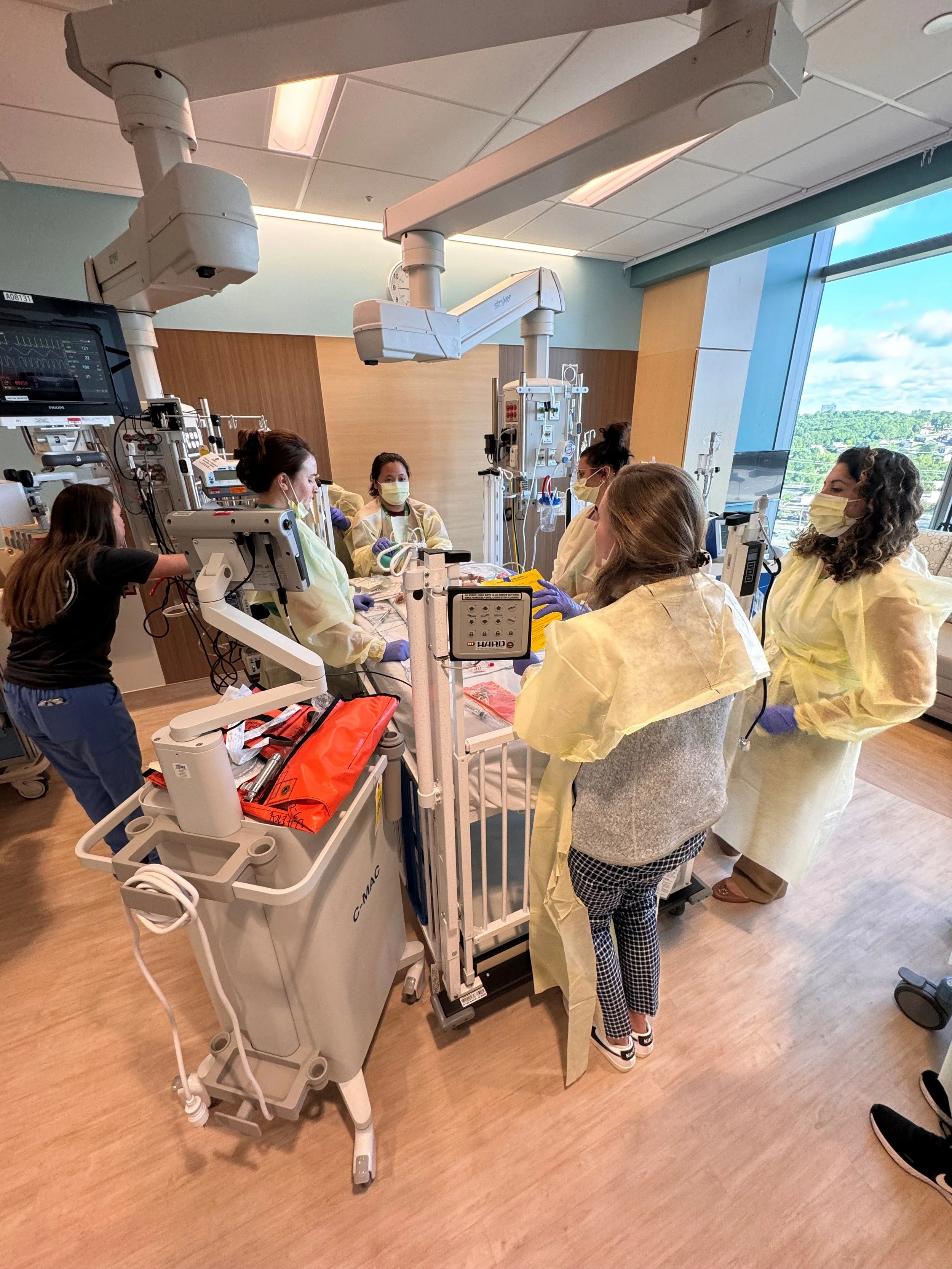
Design with Intention

Designing healthcare environments demands more than technical precision — it requires empathy, curiosity, and respect for the invisible complexity of clinical work. By embedding human factors and frontline insight into every decision, we create environments that do more than heal — they protect.

When clinicians partner meaningfully with designers, spaces evolve from static rooms into adaptive ecosystems of care. The integration of patient safety science with architectural planning transforms design from aesthetic intention into operational intelligence.

Through this lens, corridors become more than passageways. They become lifelines. Elevators become critical care continuums. Transitional spaces become active zones of safety.

The intersection of clinician expertise, safety science, and design innovation is essential. By keeping the patient at the center and amplifying the clinician voice, we move closer to spaces where safety is not accidental, but deliberate.

Because in healthcare, design is never just about how a space looks — it’s about how it performs when seconds matter most.


NIHD collaborates with clinicians, design professionals and industry partners in the healthcare design process to shape the future of healthcare design.