
Blog contribution by Theresa O’Hollaren.
Theresa is a med-tech/healthcare consultant specializing in bridging the gap between clinical practice and technology. SME in smart-room design, workflow and implementation.
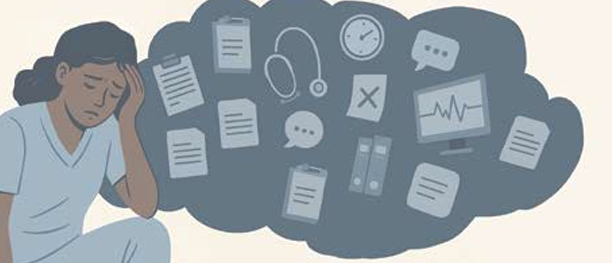
Across healthcare, nurses continue to shoulder an unsustainable clinical burden. They juggle patient care, documentation, and constant coordination with multiple departments. Outdated or fragmented communication channels are a main contributing factor. Studies have shown that nurses spend up to 40% of their shift on indirect care activities such as locating staff, following up on tasks, and relaying messages [2,4]. The result is predictable: fatigue, burnout, and turnover that threaten patient safety and both patient and staff satisfaction.
Nurse call technology, often viewed as merely a “call bell” bedside alert system, is emerging as a key player in easing clinical burden and cognitive load. Nurse call systems, like Jeron’s Provider, offer intelligent workflow automation, role-based routing, and real-time communications to automate and streamline how hospitals support clinical teams.
As a central source of alerting, communication, AND workflows, the latest generation of nurse call systems readily integrate with electronic health records (EHRs), real-time location systems (RTLS) for staff and portable equipment, and directly relay both active alerts and workflows to mobile caregivers and support staff throughout the entire facility. Instead of a unit secretary manually triaging and relaying information to staff, modern nurse call systems automatically and wirelessly send alerts and requests to the appropriate team member or support department [1,3].
With physical nurse call initiation and alerting hardware already deployed in all patient and staff areas, the ease of adding workflow stations in key locations allows nurses and support staff to manage multiple requests in real-time.
These highly customizable touchscreen stations display pending patient needs, open tasks, and departmental notifications which help teams coordinate care without the constant interruptions of overhead paging, manual phone calls, or having to remember to follow-up [3].
Connecting Departments and Streamlining Communications
Nurses often spend more time coordinating care than delivering it. Jeron Provider directly addresses this challenge by connecting clinical and ancillary departments in real-time. Utilizing workflow on Provider nurse call automates many of the repetitive steps that consume valuable clinical time:
Intelligent task routing
When a patient requests a blanket, dietary assistance, or a room clean, the system routes it directly to environmental services, dietary, or the appropriate support staff which frees up nurses from being the go-between.
Auto-notification and escalation
Missed or delayed responses automatically escalate to the next available staff member, ensuring timely follow-up without manual tracking.
Workflow station and unit board visibility
At a glance, staff can see open requests, prioritize critical alerts, and reassign tasks from a shared, visual dashboard.
These small workflow changes, repeated dozens of times per shift, add up to a meaningful reduction in cognitive and physical load [4].
Provider workflow can be incorporated across departments as part of a multistep process. Some use case examples are:
Environmental Services and Discharge Readiness
When a patient discharge order is initiated, the nurse call platform automatically alerts Environmental Services through a central dashboard or mobile notification. EVS staff can acknowledge the request, update status, and mark the room as clean. This automation dramatically improves efficiencies for both nursing and EVS [1]. The nurse is automatically notified when the room is ready, increasing patient throughput.
Transport Coordination
When a patient is ready for imaging, the system sends an automatic transport request based on a nurse initiated workflow. Transport staff receive location details and priority level directly on their devices. As tasks are completed, the nurse’s dashboard updates in real-time and there is no need to track status manually [1,3].
Dietary and Patient Experience
While in bed, patients can submit dietary or comfort requests through pillow speakers or bedside tablets. These notifications route directly to dietary or support teams, closing the loop without interrupting the nurse’s workflow [3].
By embedding automation into each department’s workflow, communication becomes proactive rather than reactive.
Measurable Impact on Clinical Burden
Hospitals implementing intelligent nurse call platforms with workflow consistently report measurable improvements [1]:
• Fewer unnecessary nurse interruptions and up to a 20–30% reduction in non-clinical calls [2].
• Improved response times for patient requests and departmental coordination [1].
• Reduced steps per shift as nurses spend less time tracking down colleagues or relaying information [4].
• Higher staff satisfaction stemming from clearer communication and reduced frustration [3].
The results translate into more time at the bedside and a better patient experience which is a win for both staff and patients.
The Conclusion: Reducing Burden & Restoring Focus
Reducing clinical burden isn’t just about efficiency; it’s about restoring the nurse’s ability to focus on patient care. The Provider nurse call system with touchscreen workflow represents a tangible step toward that goal. By automating manual tasks, streamlining departmental communication, and integrating data across systems, this technology transforms from simple nurse call into a strategic enabler of sustainable care delivery.
Hospitals that embrace this transformation are not only improving operational performance, they’re investing in their most critical resource— their caregivers.
References:
1. Miller, E. T., Deets, C., & Miller, R. V. (1997). Nurse call systems: Impact on nursing performance. Journal of Nursing Care Quality, 11(3), 36-43. doi:10.1097/00001786-199702000
2. Wang, W., Jin, L., Zhao, X., et al. (2021). Current status and inuencing factors of nursing interruption events. The American Journal of Managed Care, 27(6), e188-e194. doi:10.37765/ajmc.2021.88667
3. Klemets, J., & Evjemo, T. E. (2017). Understanding nurses’ strategies to handle (un)wanted nurse calls: A resilience perspective. Computers, Informatics, Nursing, 35(6), 289-297. doi:10.1097/CIN.0000000000000331
4. Jennings BM, Baernholdt M, Hopkinson SG. Exploring the turbulent nature of nurses' work ow. Nurs Outlook. 2022 May-Jun;70(3):440-450. doi: 10.1016/j.outlook.2 022.01.002. Epub 2022 Feb 25. PMID: 35221055.