From “wide-eyed and clueless” to “teach the why”

If you’ve ever wondered what happens when you combine emergency nursing energy with so much curiosity to learn that a credential list ends up looking like ineffective wayfinding signage—you’ll enjoy getting to know Sam Snell. 


Sam currently leads quality, safety, regulatory, and clinical effectiveness strategies across Stanford Health Care’s Emergency Services region, where the pace is fast, the stakes are high, and “workarounds” have a way of appearing the second a workflow doesn’t match reality.

In other words, Sam works in a setting that functions as the ultimate truth serum for healthcare design: if a process or a physical layout doesn’t hold up at 2:00 a.m. on a busy weekend, the ED will let you know. Immediately

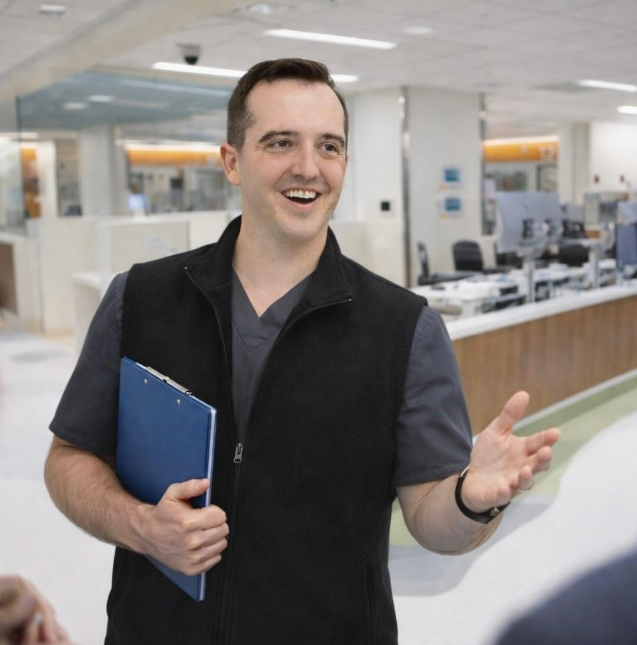
Sam Snell, Stanford Health Emergency Services

Sam’s first real exposure to healthcare design didn’t start with blueprints or finish selections. It started where many of us probably did as nurses, right where the meaningful design lessons come to life: transition and activation. 

While working with local transition and activation teams for new ambulatory spaces in Cleveland, Sam describes himself as “wide eyed and clueless.” Because the truth is, most of us don’t walk into our first activation project thinking, “I can’t wait to debate storage locations and door swings.” We walk in thinking, “Wait… who decided this goes here?” 


After relocating to California, Sam’s “aha” moment came during a full hospital platform effort, learning from YellowBrick’s team coordinating transition and activation. What stood out wasn’t just the refined logistics—it was the approach. 

Sam still remembers the facilitators of an ED-focused tabletop series who shaped that experience: Kathy Stevenson, Kelly Guzman, and Ann Ahmadi. Their impact wasn’t about directing a checklist; it was about building understanding. 

As Sam puts it, they had a “genuine desire to ‘teach the why’ rather than ‘dictate the task.’” That distinction lit a spark—because once you start seeing why spaces work (or don’t), you start noticing everything: flow, handoffs, visibility, safety risks, the places families gather, the moments privacy is needed, and the subtle barriers that create friction for staff. 

Those experiences—and the curiosity that followed—ultimately led Sam to join NIHD, where nursing insight and design strategy meet in the middle and become something better than either could be alone. 

Why NIHD matters to Sam.

For Sam, NIHD is a home for the kind of interdisciplinary thinking healthcare needs more of—especially when it comes to bridging design intent and operational reality. 

He joined because he values environments built with purpose: spaces that support safety, dignity, clarity, and calm—without forgetting that clinicians are doing complex work under pressure.

The goal isn’t just a beautiful space; it’s a space that performs from every perspective. 

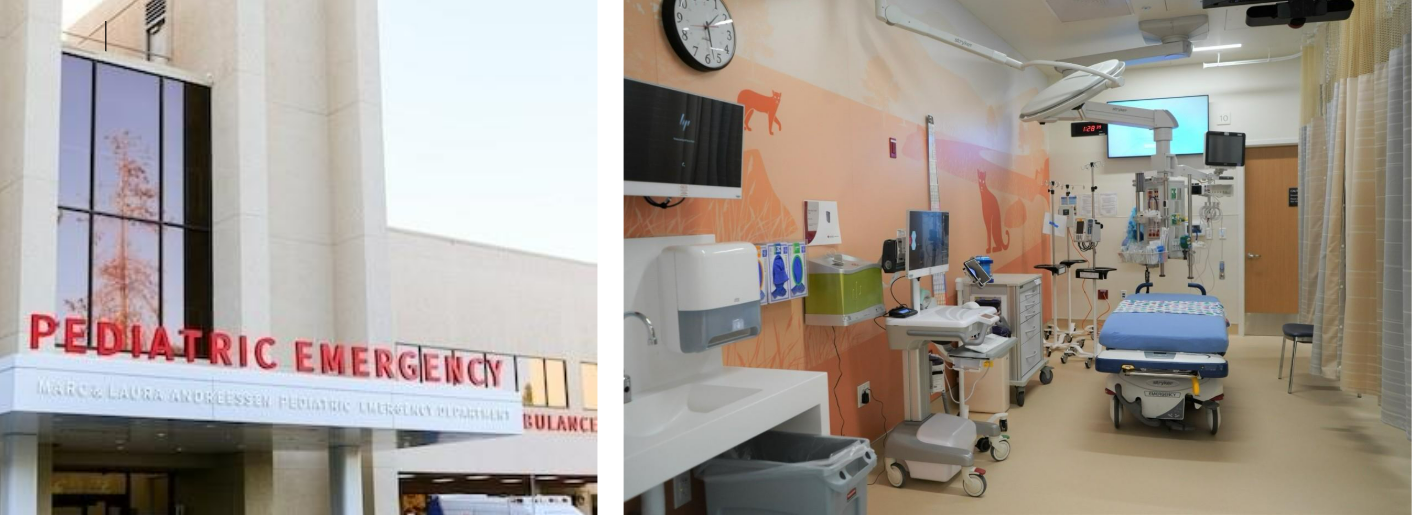
Sam Snell, Stanford Health, Pediatric Emergency

And if you ever want to see Sam light up, ask him about the moment a team stops debating preferences and starts aligning around principles—the “why” that makes decisions stick.