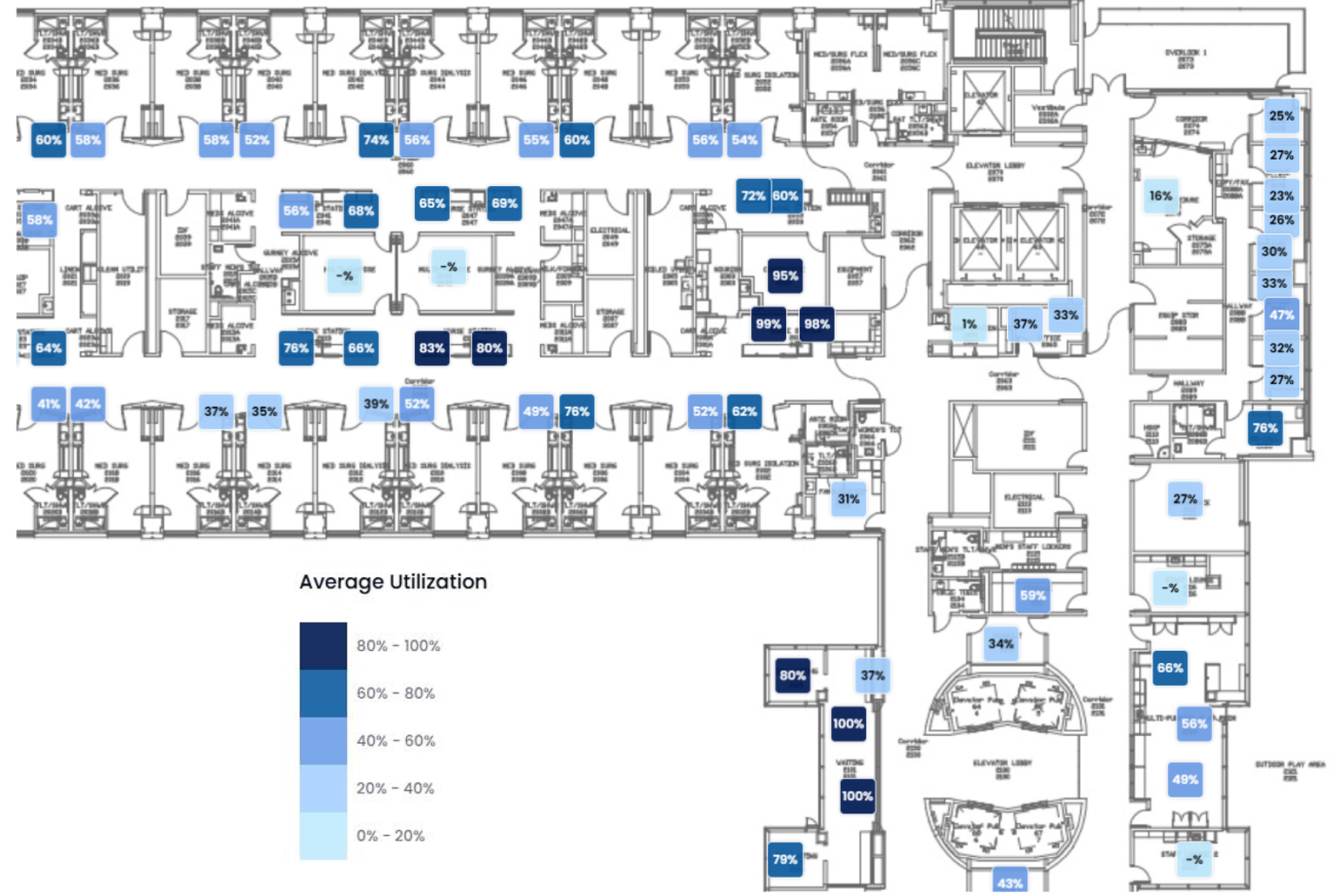
In the modern healthcare landscape, space is both a highly regulated and an exceptionally expensive resource. At Stanford Medicine Children’s Health, our construction costs are exceptionally high, driven by renovations in an active pediatric hospital on a dense Palo Alto campus and extensive regulatory requirements - making efficient use of every inch essential.
To address these constraints, the organization implemented an innovative occupancy sensor program to replace anecdotal space requests with hard data.
By deploying over 2,650 infrared sensors across 19 buildings—including workstations, consult rooms, and sleep rooms—the Space Planning department has gained a clear, objective view of how their facilities are actually utilized, allowing for smarter decisions regarding current footprints and future expansions.