Blog contribution by NIHD President, Elizabeth Johnson, PhD, MS-CRM, RN
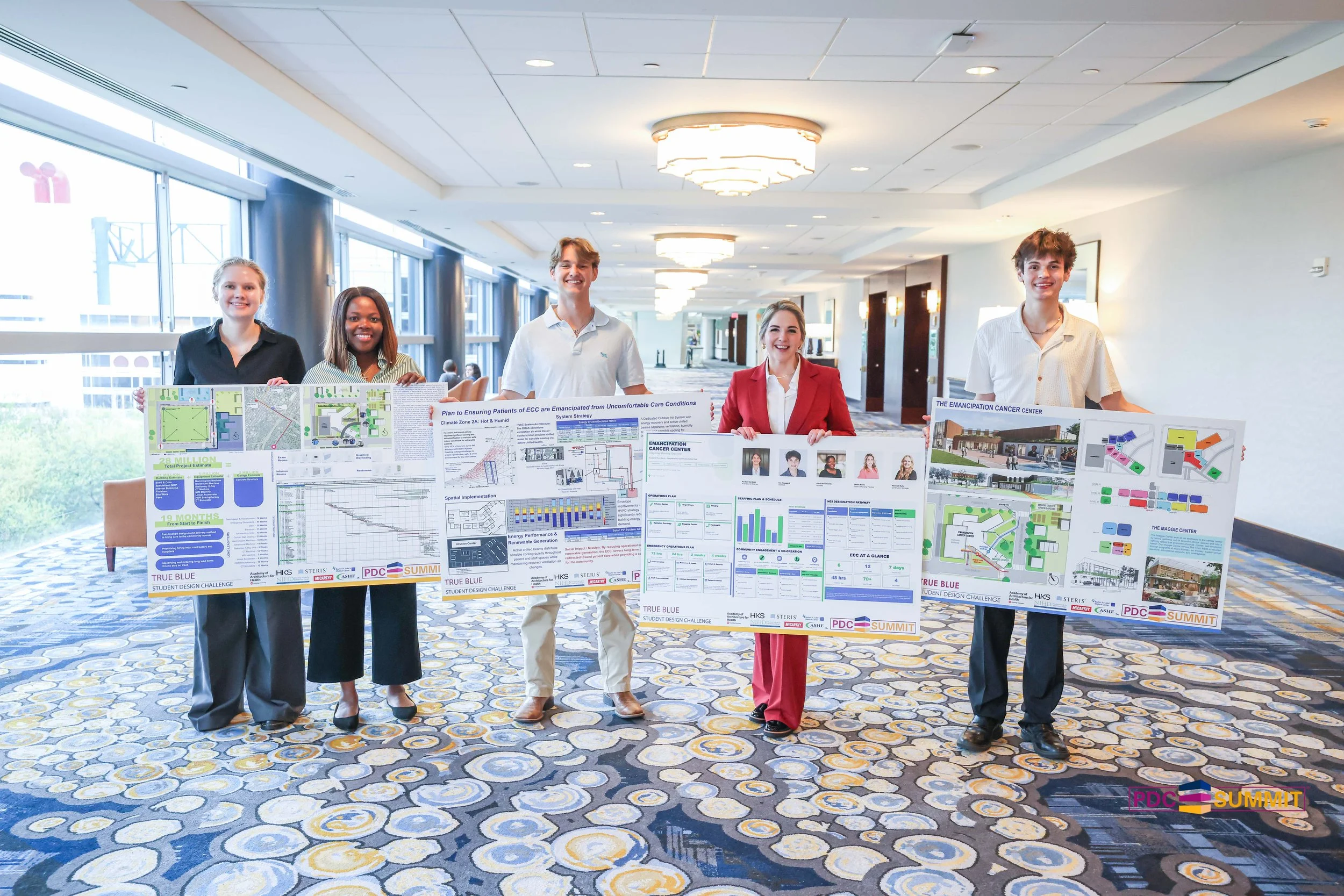
This question has stayed with me following the PDC Summit, where I had the privilege of watching student teams in the PDC Student Design Challenge reimagine micro cancer center environments in Houston’s Third Ward. Working together for the first time and under just 47 hours, these teams not just designed these spaces but also explored how communities themselves define care. Their work reflected a powerful truth: the most meaningful healthcare environments are not simply built for communities, but with them. Across each proposal, there was a shared emphasis on the first moments of entry, the experience of arrival, the signals of belonging, and the emotional tone set by a space. Memorable experiences and sense of pride in care delivery and environmental design are foundational for continuous improvement and sustainability, especially in community settings. We look forward to showcasing this experience through an upcoming blog from Dr. Seneca Moore, University of Utah College of Nursing, and her reflections as an advisor for the nursing students who participated.
This perspective resonates deeply as we look toward broader system transformation, particularly through initiatives like the Rural Health Transformation Program. As we invest in care coordination and infrastructure, we must remember that care begins long before clinical intervention. It begins at the threshold: in the clarity of wayfinding, the tone of communication, and whether an environment conveys welcome or uncertainty. These seemingly small interactions shape trust, influence outcomes, and define the human experience of healthcare. Whether in rural communities, evolving “new urban” spaces, or emerging models of care delivery, trust in this next era will be built through inclusion by welcoming new voices into the process of creation and embedding hospitality across the full continuum of care. If you have not yet had a moment, this is a great time to reach out to your Department of Public Health/Human Services in your states or covered territories to learn more about the Program and these facilities’ upcoming needs.
Welcoming, however, is not simply about aesthetics or amenities. It is about equity. For many individuals, particularly those from historically marginalized or underserved communities, healthcare environments can feel intimidating, disorienting, or even exclusionary. Thoughtful design has the power to change this. It can reduce barriers, affirm identity, support cultural safety, and create conditions in which individuals feel seen, respected, and safe. The challenge before us is to then move from concept to practice. Welcoming must be embedded into our design processes, our standards, and our measures of success. It requires meaningful engagement of patients, families, and communities as co-designers. It calls for interdisciplinary collaboration and the willingness to question long-held assumptions about what healthcare spaces should be.
This month, we are honored to feature insights from Dr. Gordon Hill of Glasgow Caledonian University, Director of the WHO Collaborating Centre for Education, Research and Practice in Nursing and Midwifery. His work, including engagement in The Welcoming initiative, highlights the global importance of approaches that foster inclusion, connection, and shared learning among those who have historically experienced exclusion from systems of care and support. What distinguishes us, as members of the Nursing Institute for Healthcare Design, is our ability to see what others may overlook: the friction points, the moments of vulnerability, and the opportunities to transform experience through thoughtful, human-centered design. We bring a perspective that is both deeply compassionate and rigorously practical.
The future of healthcare design will not be defined solely by technology or efficiency, but by our ability to create environments that genuinely welcome. This is both an aspiration and a responsibility we carry forward as an Institute. As we move into spring, a season of beauty and renewal, I offer a new reflection this month: Where are the opportunities to make care more welcoming? What would change if every design decision were guided by this question?
Together, we can ensure that every person who enters a healthcare space feels not only treated, but truly received.
NIHD collaborates with clinicians, design professionals and industry partners in the healthcare design process to shape the future of healthcare design.