
Making ROOM for Nurse Well-Being

Blog contribution by NIHD President, Elizabeth Johnson, PhD, MS-CRM, RN


Healthcare design often begins with what we can see. We carefully consider light, circulation, furnishings, materials, technology, and workflow. Yet one of the most influential characteristics of any healthcare environment is often experienced before it is ever observed. It is sound!

I’m a mom of a child who was non-hearing and will remain significantly hard of hearing for life. Sound – the absence and abundance – is something our family is sensitive to in clinical environments. Mixtures of conflicting sounds, clacking of shoes on tile, muffled televisions – these create more stress for my son than the appointments themselves.

As clinicians, we know that healing conversations are among the most meaningful interventions we provide. They occur when a patient shares a symptom they have never spoken aloud, when a family receives life-changing news, when a nurse comforts a frightened child, or when colleagues pause to solve a complex clinical problem together. These moments depend upon trust, and trust depends upon environments that allow people to speak openly and listen without distraction. Or, in the case of my son and many others, an opportunity to focus on the present without environmental distractions where sound bounces about and heightens feelings of vulnerability.
Click to read

Click to read

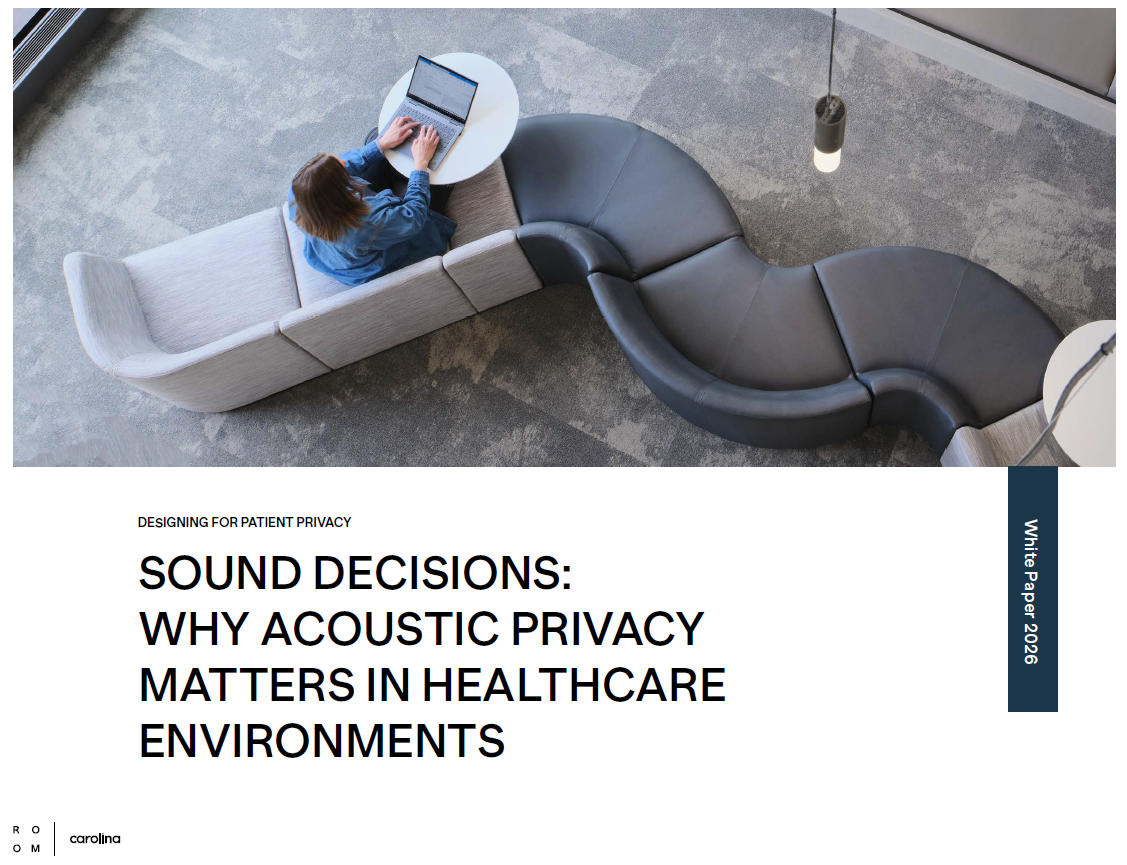
This is why the recently released Sound Decisions: Why Acoustic Privacy Matters in Healthcare Environments white paper from our organizational partner, OFS Carolina, developed in collaboration with ROOM, is such an important contribution to healthcare design.

Rather than viewing acoustics solely as a technical building performance measure, we are collectively challenged to recognize acoustic privacy as a clinical, operational, and human-centered design imperative. Did you know that 4% of emergency department patients reported withholding or altering medical information because they were concerned they would be overheard?


Both the World Health Organization and the Facility Guidelines Institute recommend patient care environments maintain sound levels of approximately 40 decibels. Yet many hospitals routinely operate between 50 and 70 decibels, while intensive care units and operating rooms frequently exceed 80 decibels.

These elevated sound levels have been associated with disrupted sleep, delayed recovery, increased stress, communication challenges, and greater cognitive burden for healthcare professionals.

Perhaps most striking is the finding that approximately four percent of emergency department patients reported withholding or changing medical information because they feared they would be overheard. Every clinician understands the significance of that statistic. Information that is never shared cannot inform diagnosis, treatment, or compassionate care.


One aspect of this work that is particularly meaningful to our organization is the collaborative process behind it. The development of the ROOM x Carolina healthcare privacy solution incorporated feedback from clinician partners, including members of NIHD, ensuring that decisions regarding usability, infection prevention, privacy, and workflow were informed by the realities of clinical practice. We are especially grateful to Kevin Meek, NIHD Past President, whose commitment to partnering with clinicians exemplifies the interdisciplinary collaboration our institute seeks to cultivate.


Advocacy extends beyond policies, procedures, and clinical decisions. It also includes advocating for environments that preserve dignity, encourage honest communication, reduce cognitive burden, and support the wellbeing of patients, families, and healthcare teams alike.

Acoustic privacy is about creating the conditions in which trust can flourish, literally dampening the noise and confusion that can swirl around you when feeling stressed or unwell and allow mental space for healing and fostering relationships between caregivers, providers, and patients.


We often describe our mission at NIHD as bringing the clinical voice into the design process. When we intentionally design environments that support listening, confidentiality, and human connection, we strengthen not only the spaces in which care occurs but also the relationships that define healthcare itself.